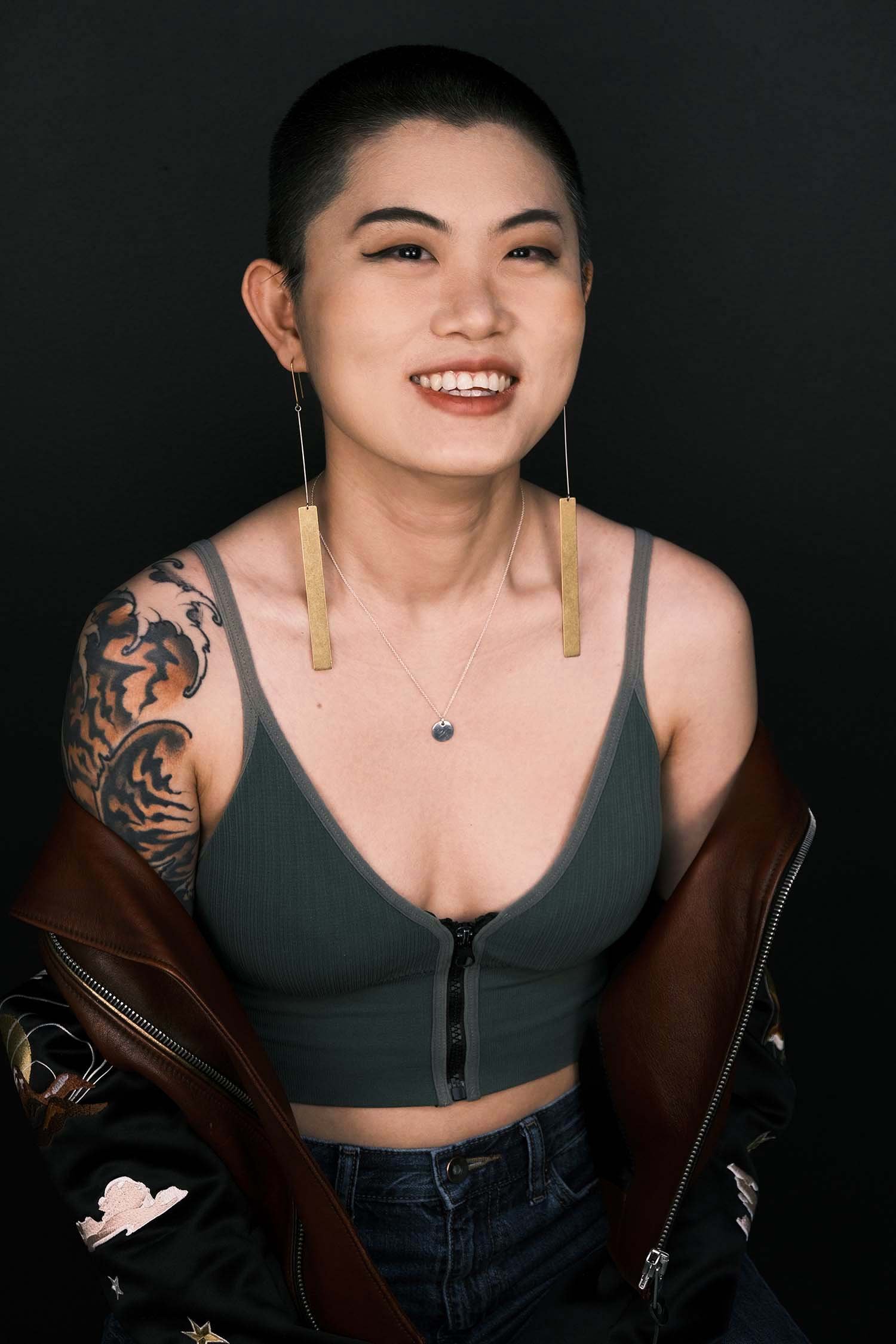
Hi, I’m Diaota
I've loved drawing for as long as I can remember. Creating art has always been the way I understand the world, and tattooing became the perfect medium to share that passion with others.
To me, tattooing is one of the most romantic forms of art. Unlike a painting that hangs on a wall, a tattoo becomes part of someone's life and story. It creates a lifelong connection between the wearer and the artist, and being trusted with that is something I never take for granted.
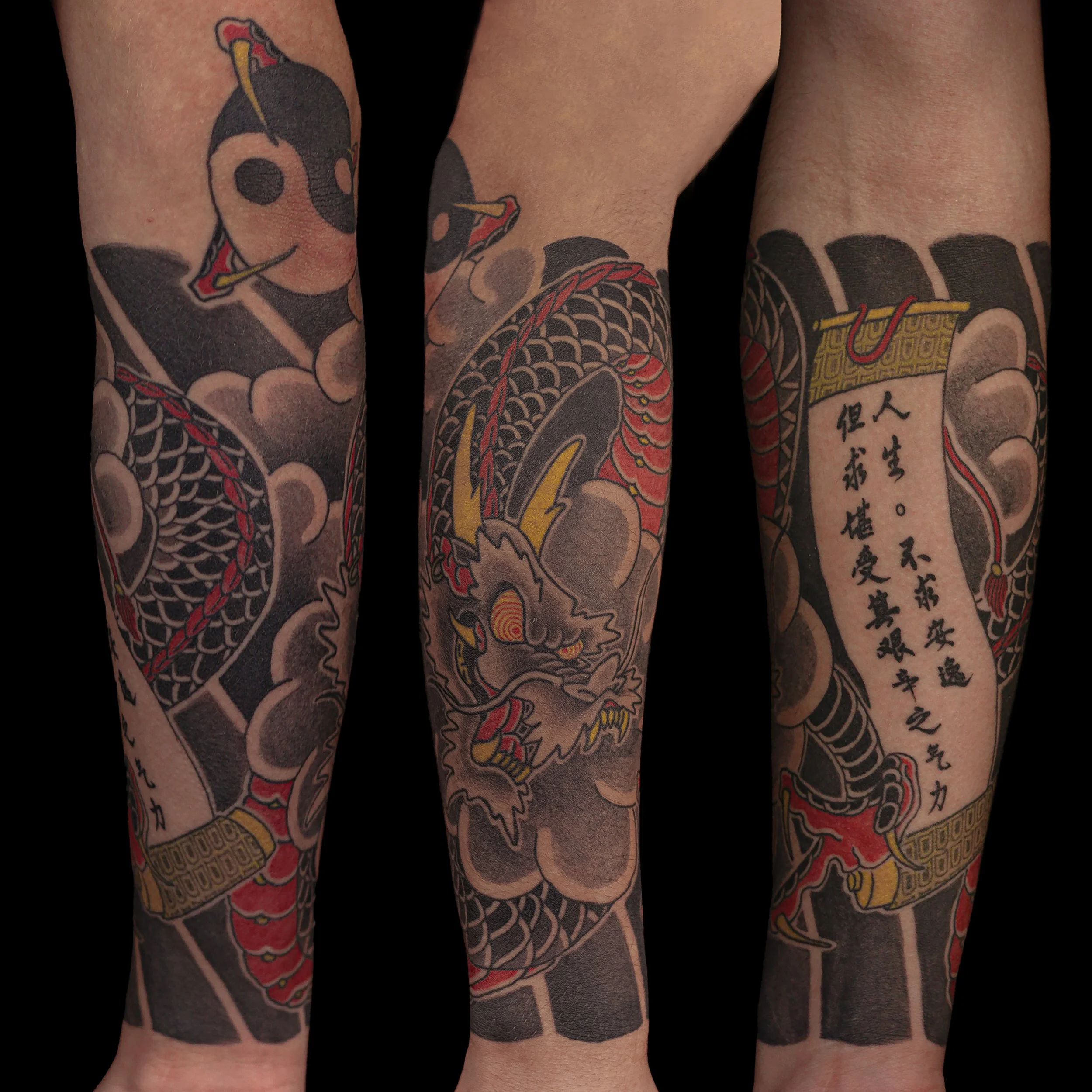
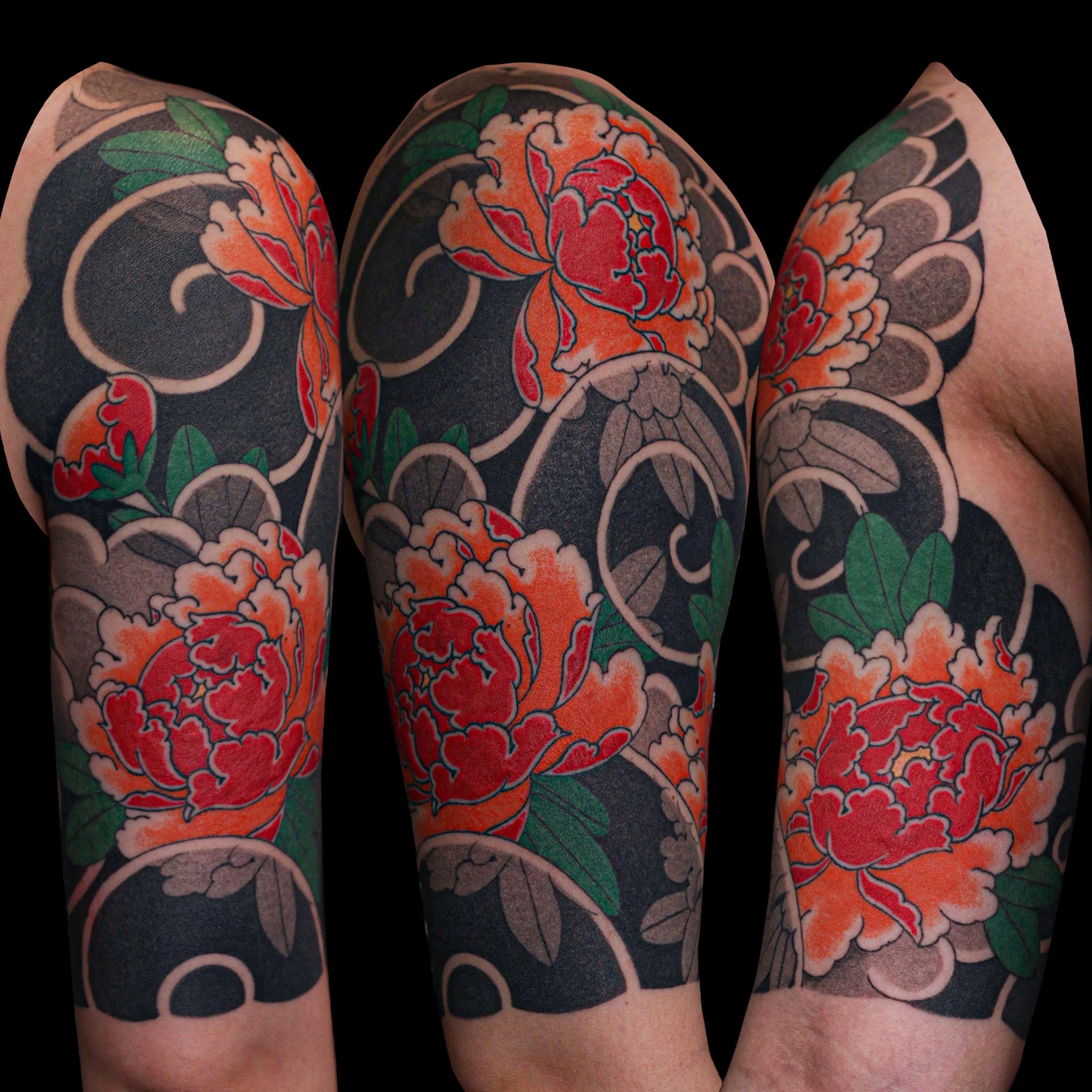
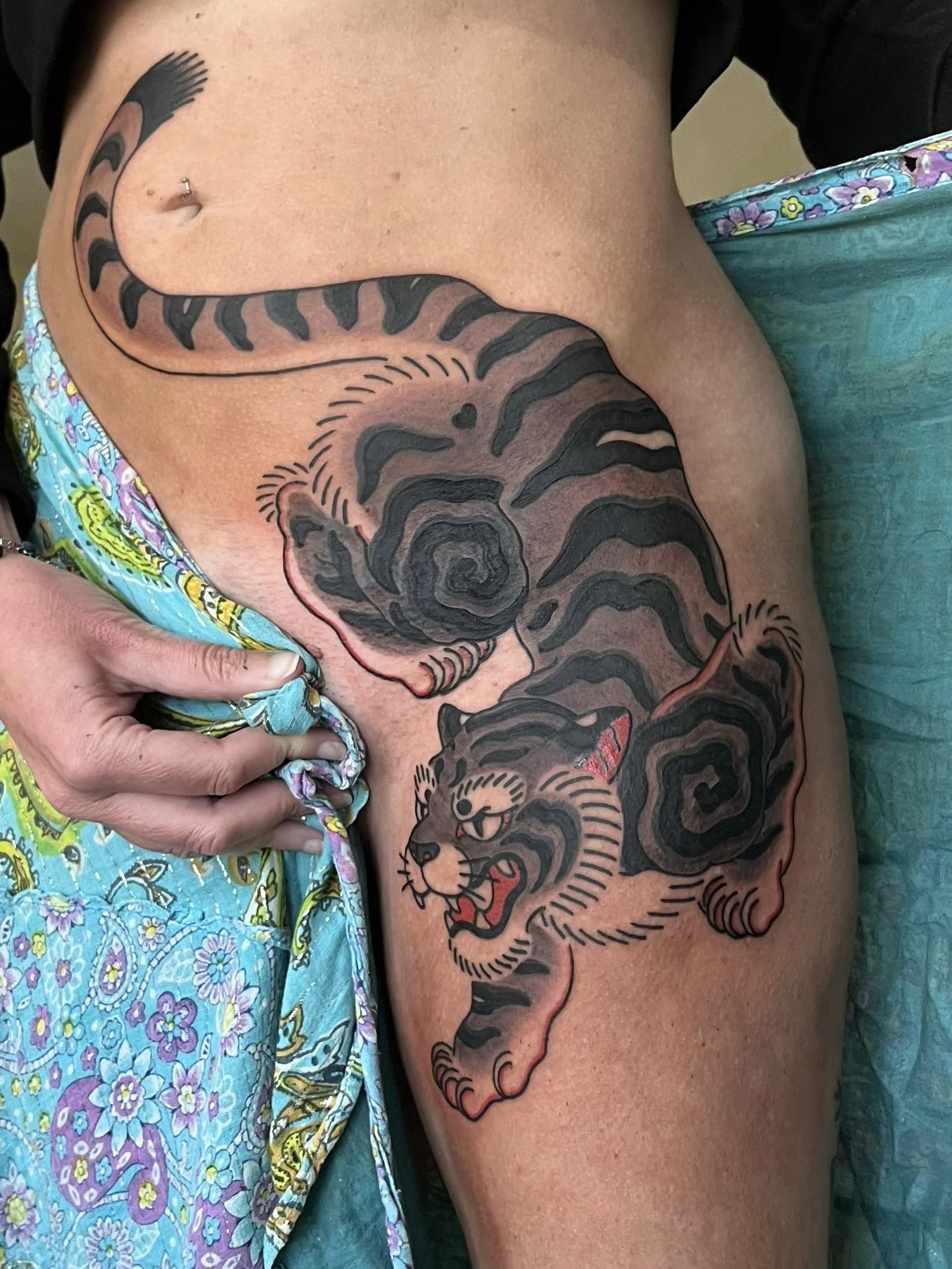
I chose to dedicate my work to Asian Traditional tattooing because I fell in love with the stories, symbolism, and history behind every design. As someone with an Asian background, this style feels deeply personal to me. Within irezumi, I see echoes of Chinese mythology, philosophy, and artistic traditions—cultures that have influenced and inspired one another for centuries. Every piece carries meaning far beyond its visual beauty.
Whether it's a large bodysuit or a small meaningful piece, my goal is to create tattoos that honour the tradition while telling a story that is uniquely yours.
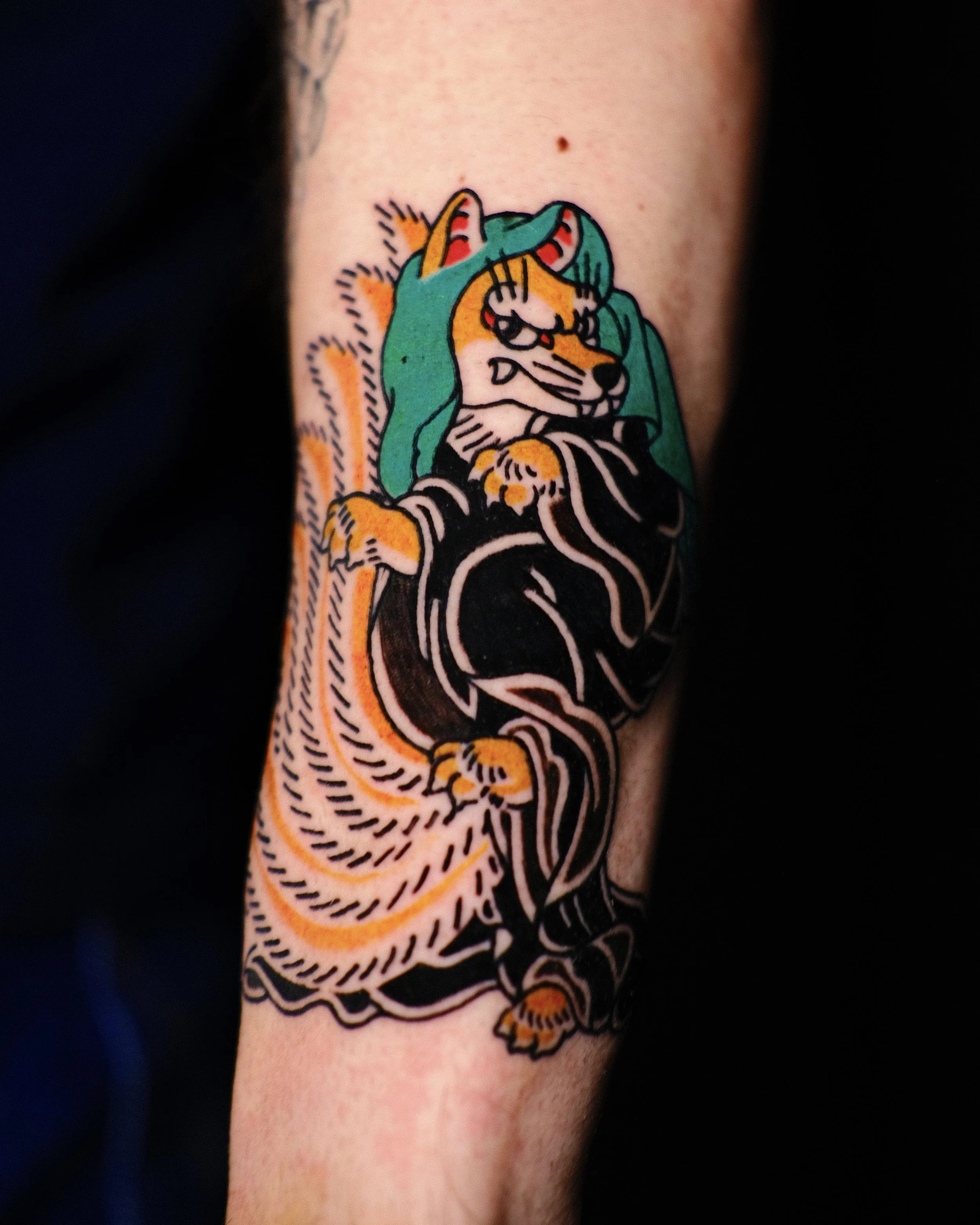
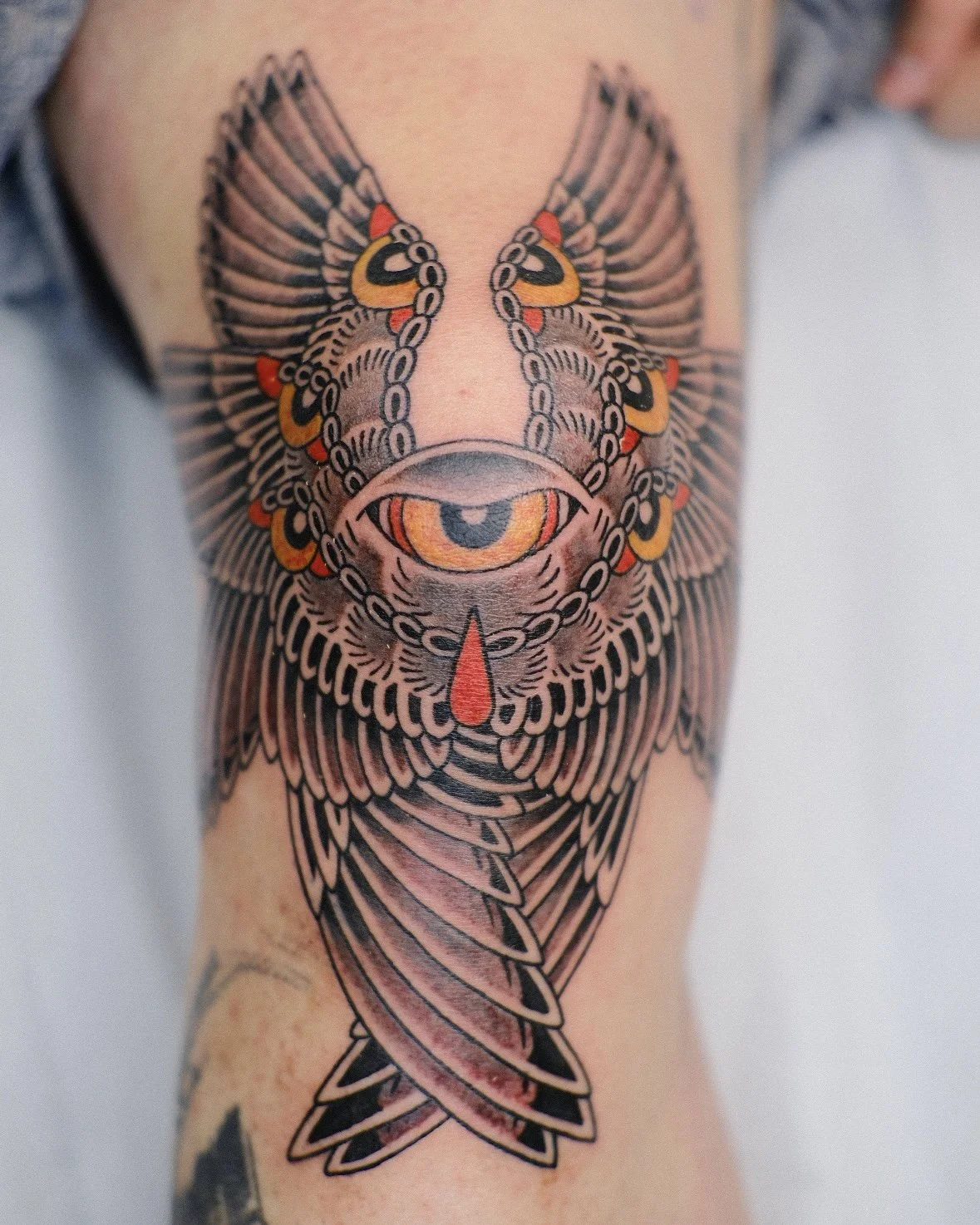
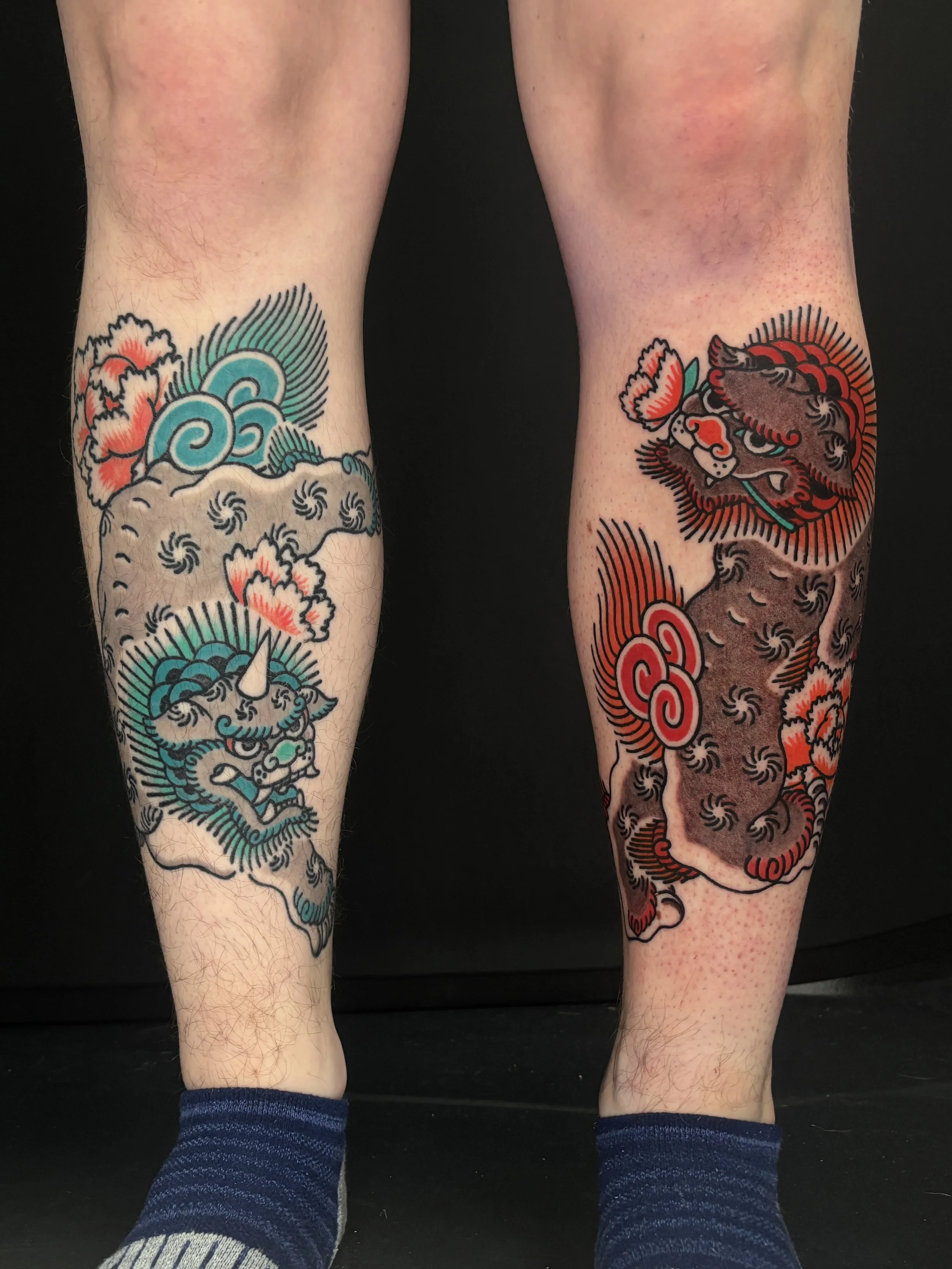
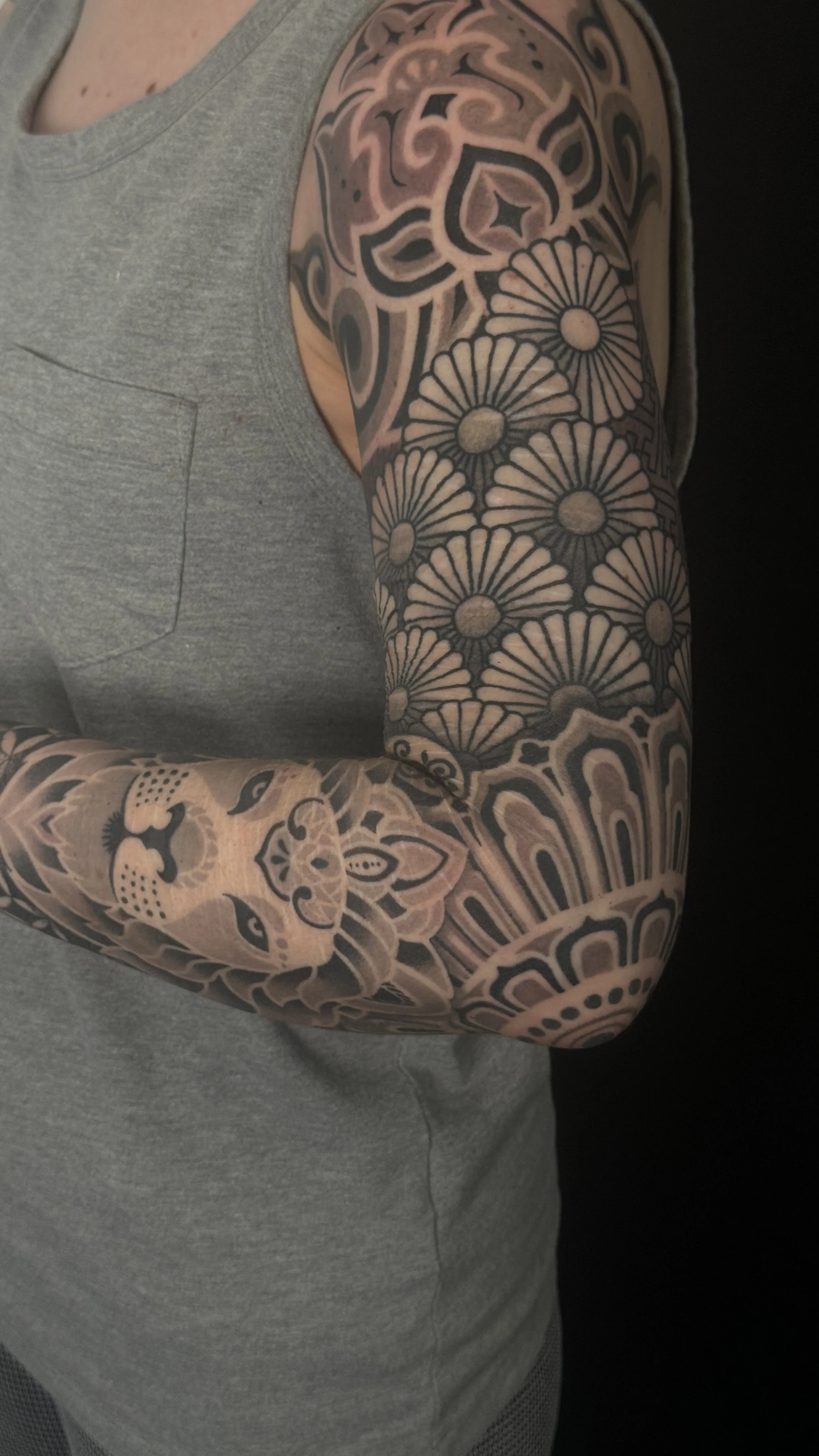
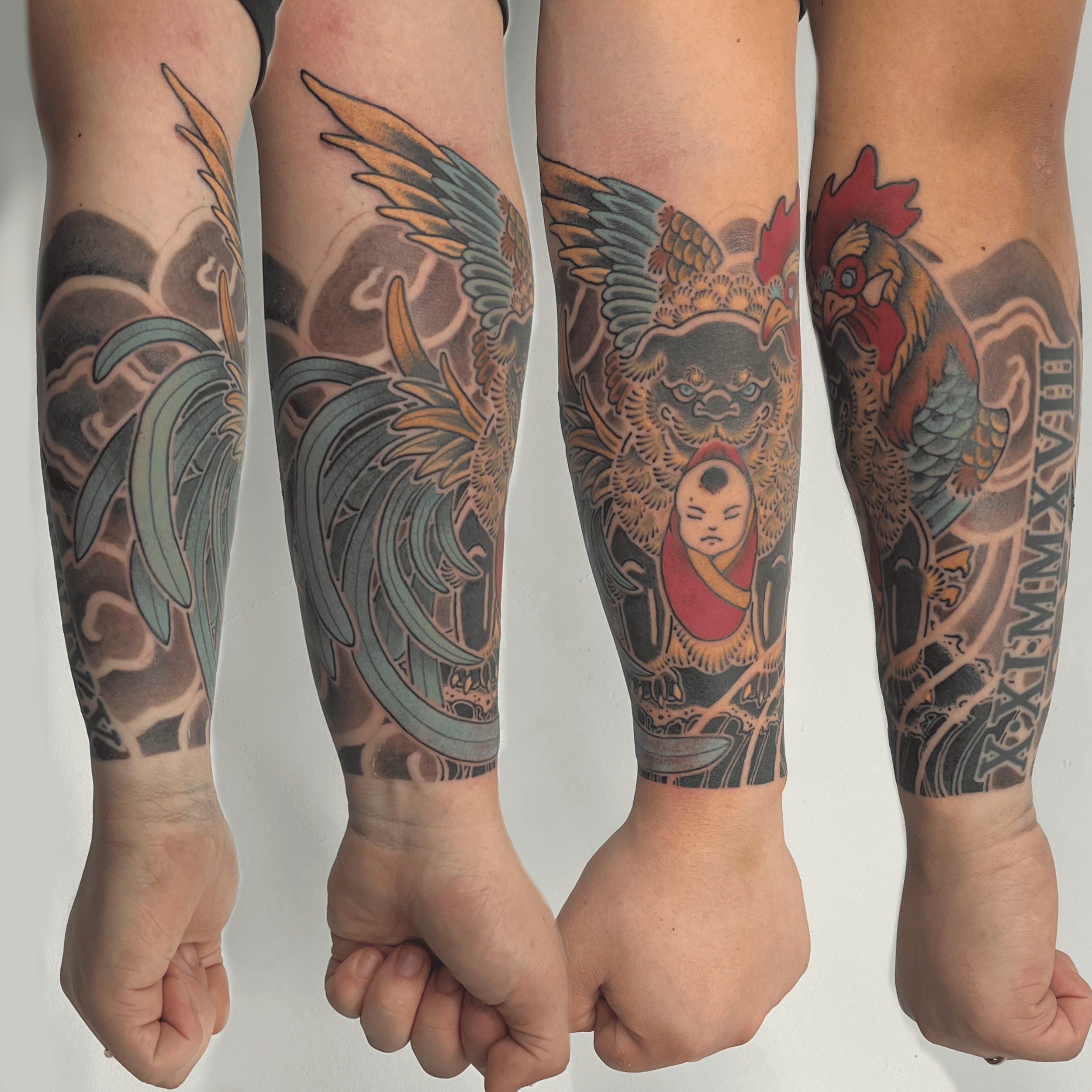
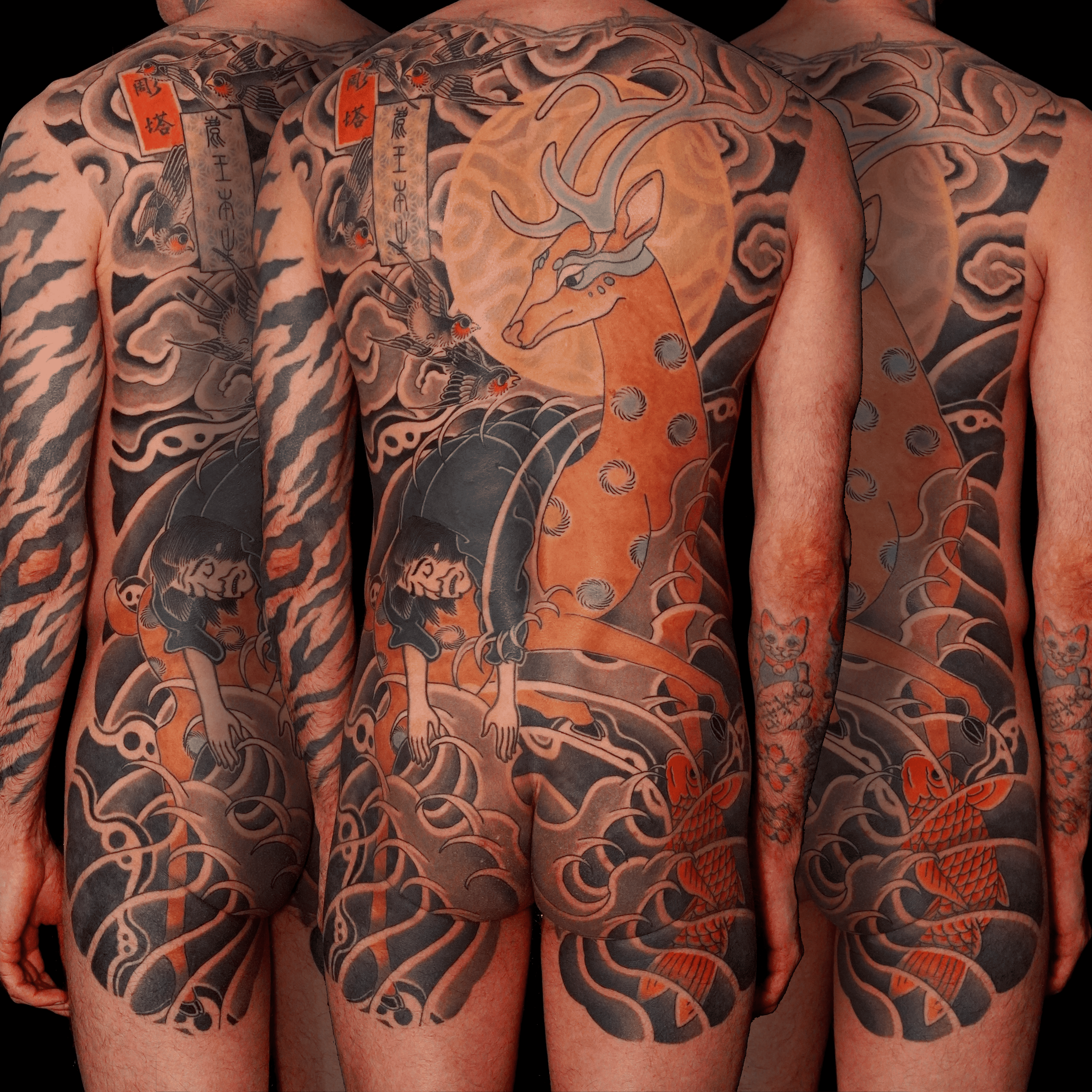
Deer King Jataka (Nine-Colored Deer)
is a Buddhist tale about compassion and selflessness.
One day, the Deer King hears a man drowning in a river. Although he knows revealing himself could put his own life in danger, he rescues the man without hesitation. In my composition, I chose to capture this exact moment—the Deer King carrying the man to safety while birds fly above, warning him of the danger ahead.
After being saved, the man promises never to reveal the deer's whereabouts. But when offered a reward by the king, he betrays the Deer King out of greed. In the end, the truth is revealed, the deer's compassion moves the king, and the forest is declared a sanctuary where the Deer King and all living creatures will be protected.
This piece is especially meaningful to me because it is my very first full back piece. I was incredibly fortunate that my client trusted me completely and gave me full creative freedom. That trust made this milestone even more memorable, and I hope it's the first of many large-scale stories I'll have the opportunity to tell through tattooing.
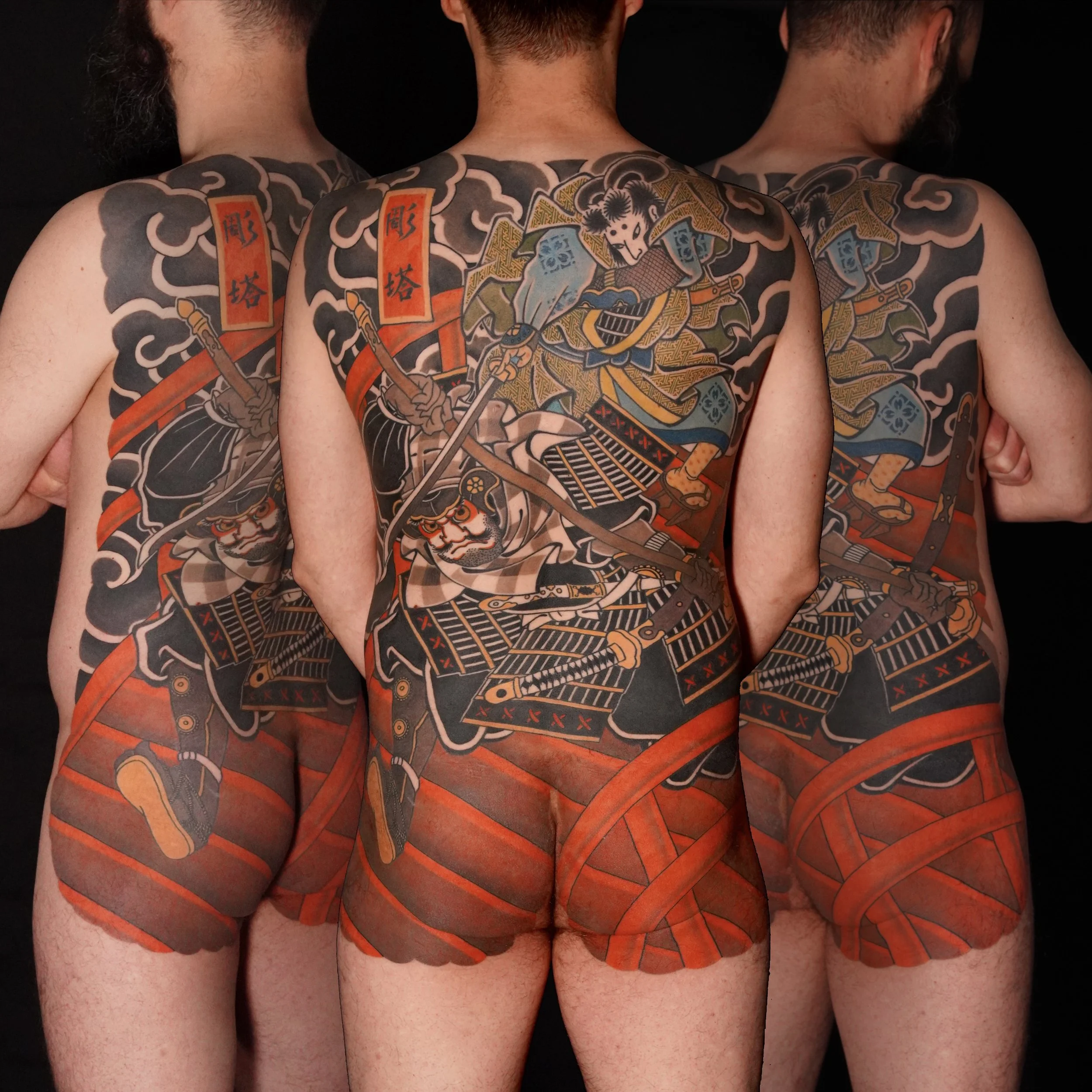
Yoshitsune and Benkei – Their First Meeting on the Bridge
One of the most iconic stories in Japanese history tells of the first meeting between Minamoto no Yoshitsune and Benkei on Kyoto's Gojo Bridge.
Benkei, a warrior monk of immense strength, had challenged countless samurai and collected their swords as trophies. After defeating 999 opponents, he sought one final victory to reach one thousand.
That final opponent was the young Yoshitsune. Though much smaller in stature, Yoshitsune's unmatched speed, agility, and swordsmanship allowed him to outmaneuver the powerful Benkei. Unable to land a single decisive blow, Benkei was defeated.
Deeply humbled by the encounter, Benkei recognized Yoshitsune's extraordinary spirit and swore lifelong loyalty to him. From that day forward, he became Yoshitsune's most trusted retainer, standing by his side through countless battles until their legendary final stand together.
Their meeting symbolizes the triumph of skill over strength, humility in defeat, and the unbreakable bond of loyalty forged through mutual respect.
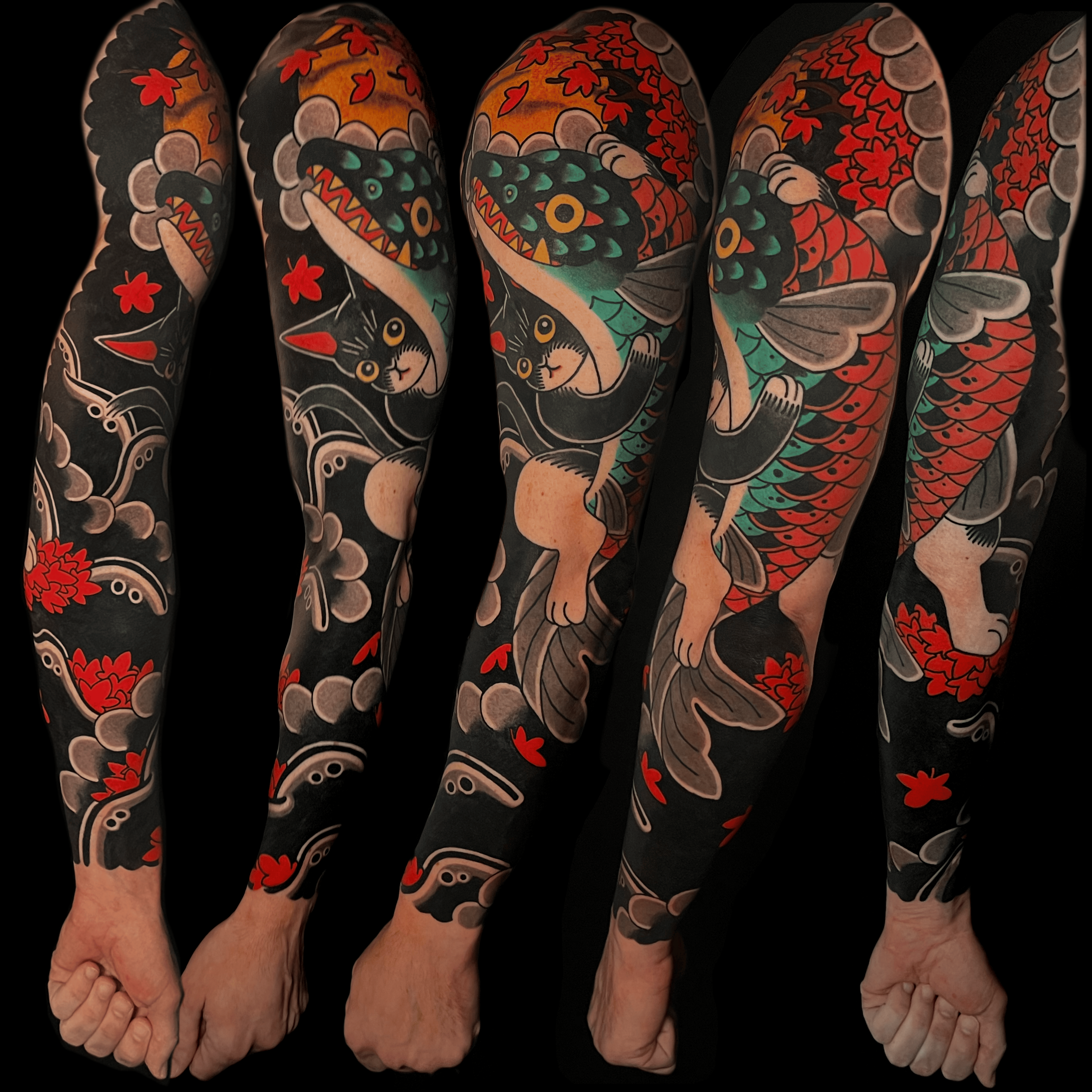
A Personal Story Through Traditional Imagery
This piece began with the client's beloved cat, but after our consultation, it became something much more personal. The client wanted the cat to represent themselves, while the salmon symbolized the constant struggle and cycle of life.
To bring that idea to life, I drew inspiration from the classic Japanese motif of Kintarō wrestling a giant carp (koi). In traditional Japanese tattooing, this image represents courage, perseverance, and overcoming life's greatest challenges. Rather than simply recreating the original composition, I reimagined it by replacing Kintarō with the client's cat and the koi with a salmon, preserving the dynamic energy while giving it an entirely new meaning.
The result is a playful yet symbolic design that blends personal storytelling with traditional Japanese aesthetics—a reminder that every struggle we face is part of life's continuous journey, and that even the smallest among us can find the strength to wrestle with something much greater.
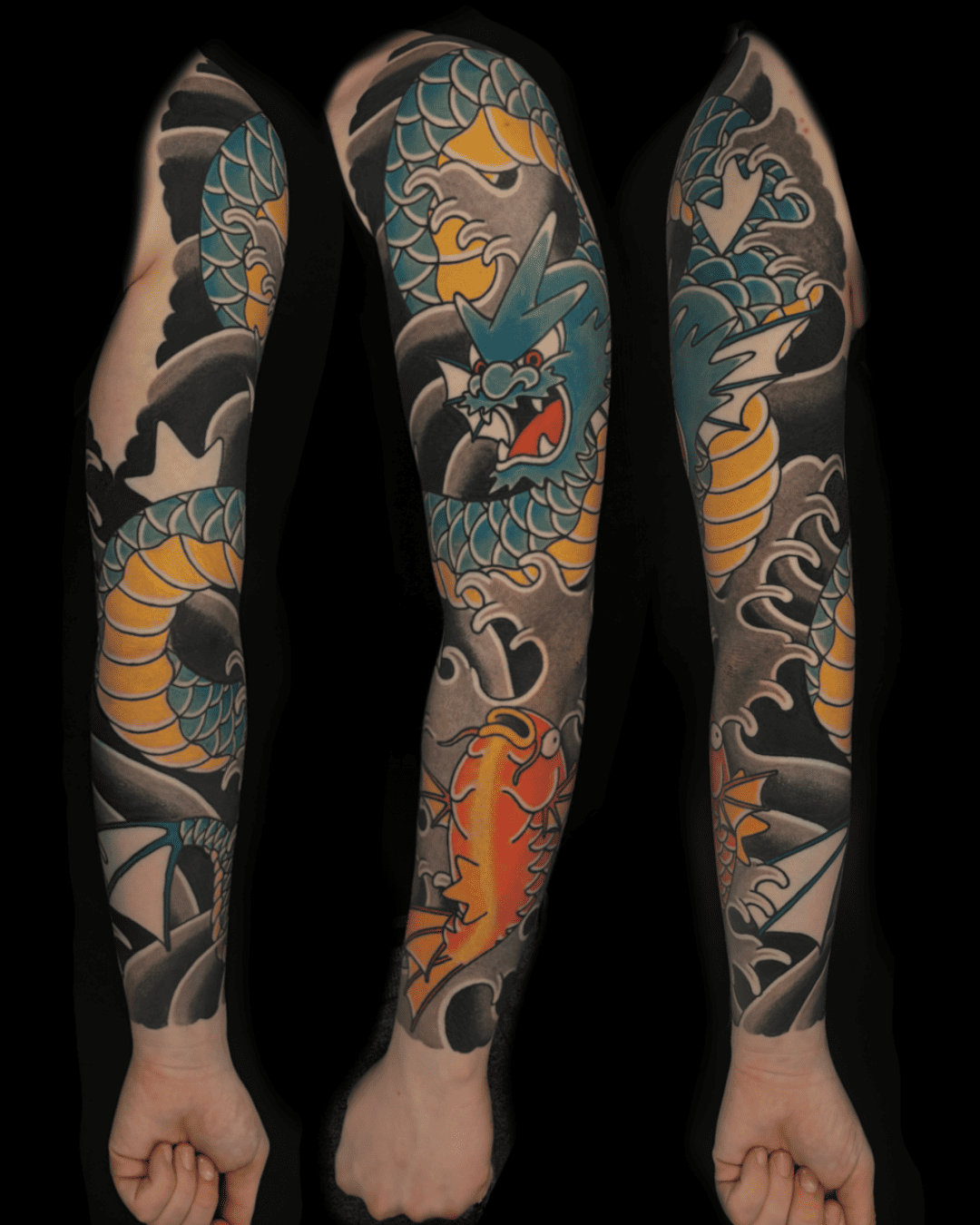
Magikarp and the Legend of the Dragon Gate
This piece combines one of Japan's most enduring legends with a bit of humour. Instead of a traditional koi, I chose Magikarp from Pokémon—a character often seen as weak and overlooked, yet one that evolves into the mighty Gyarados. It felt like the perfect modern interpretation of the classic story.
The design is inspired by the legend of the Koi Leaping Over the Dragon Gate, where countless koi swim against powerful currents, but only one succeeds in reaching the top and transforms into a dragon. For generations, the story has symbolized perseverance, growth, and the reward that comes from never giving up.
I also wanted this project to reflect something that is often forgotten about traditional Japanese tattooing. Much of its imagery comes from ukiyo-e woodblock prints, which weren't created as fine art for museums—they were the entertainment media of the Edo period. They were affordable illustrated prints filled with folklore, heroes, monsters, humour, and everyday life, designed to entertain as much as they were to tell stories.
I think Japanese tattooing carries that same spirit. While many designs have deep symbolism, they don't always have to be serious. They can be clever, playful, and fun. Reimagining the legendary koi as Magikarp is my way of honouring both the tradition and its sense of creativity, proving that a tattoo can tell a meaningful story while still making people smile.